
 C:\Content\Personal Essays\Loving Someone Who Doubts Your Love
Loving Someone Who Doubts Your Love
August 8, 2026
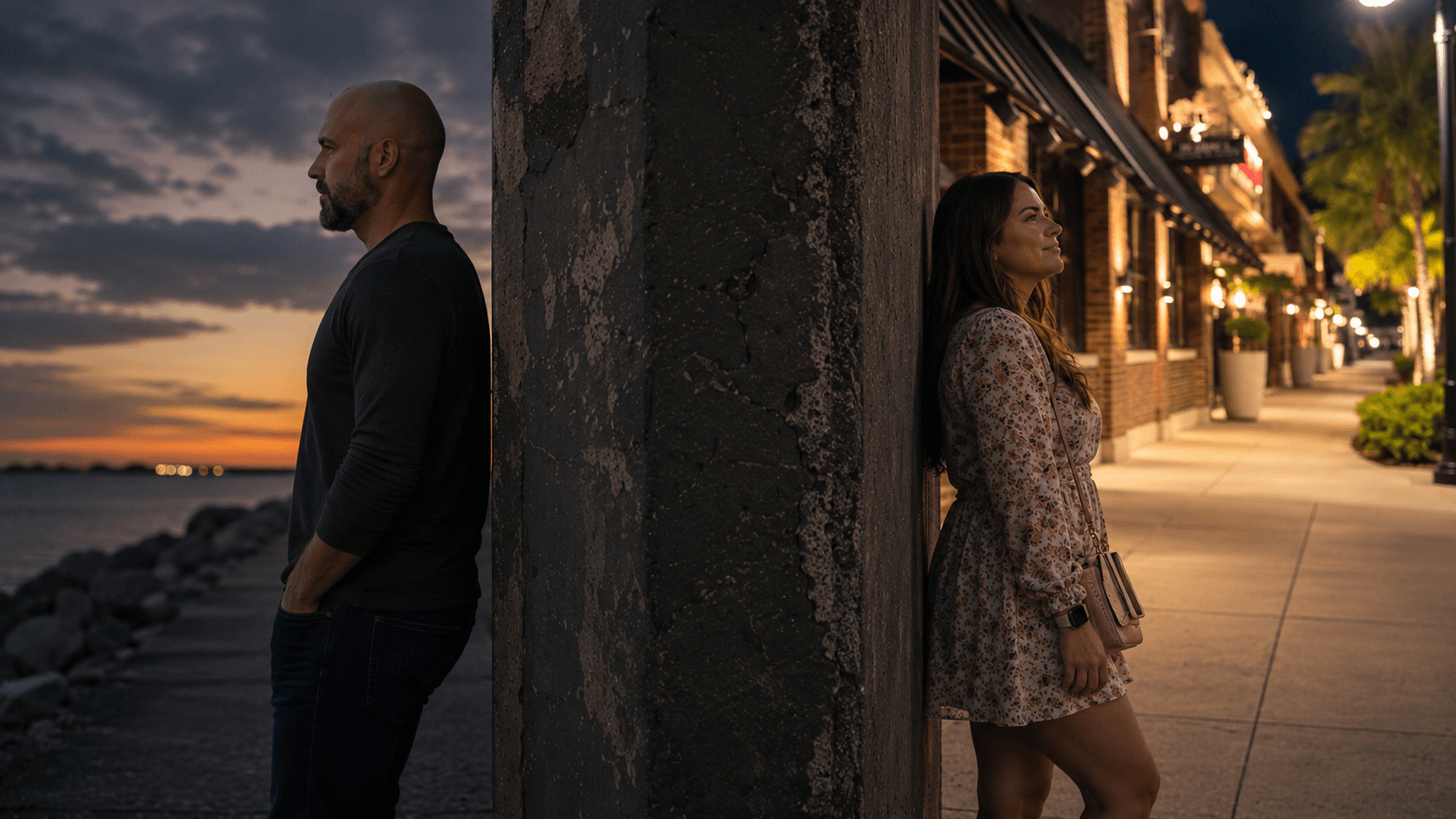
One of the hardest things I’ve had to accept is that loving someone and making someone feel loved are not always the same thing. I believed with everything in me that I loved her. Looking back, I still believe that. But love isn’t measured only by what exists inside your heart. It’s also measured by what the other person experiences. Somewhere along the way, those two realities drifted further and further apart until we were living in completely different versions of the same relationship.
For a long time, I carried the frustration of thinking, “How can you not see how much I love you?” I fought for us. I stayed through things many people would have walked away from. I imagined a future with her. I wanted our marriage to work. Yet, somehow, the more I tried to convince her that I loved her, the more convinced she became that I didn’t. Every attempt to reassure her seemed to become another piece of evidence that I was failing. It was exhausting trying to prove something that, to me, felt so obvious.
At the same time, therapy has forced me to ask a much more difficult question: if someone consistently feels unloved, does it matter how much love I believe I had? That’s a painful question because it requires me to look beyond my intentions and examine my actions. Intentions matter, but they don’t erase impact. I can honestly say I loved her while also admitting there were moments when my behavior made that love difficult to see.
There was a birthday I missed. It happened because I was in the middle of moving, consumed by everything happening around us. Another year, I missed the holidays because I had my children, something that had been part of my life long before we met. Then there was the holiday season after one of our biggest fights. I pushed her away. Instead of moving toward my marriage, I found myself emotionally leaning on the mother of my children because, in that moment, I was desperate for stability. Not romance. Not reconciliation. Stability. My marriage felt like it was collapsing beneath my feet, and I instinctively reached for the one part of my life that still felt predictable. Looking back, I understand how deeply that could have hurt her. I understand why it may have reinforced every fear she already had.
I also know there were parts of me that I didn’t understand at the time. During our relationship, I was often described as emotionally unavailable or labeled a dismissive avoidant. I understand why. From the outside, shutting down can look exactly like someone who doesn’t care. But therapy has helped me understand something different. My patterns are much more consistent with disorganized attachment. I don’t withdraw because I don’t want closeness. I withdraw because I want it so badly that, when conflict reaches a certain point, my nervous system becomes overwhelmed. I don’t stop loving. I stop functioning.
That doesn’t excuse the way I handled conflict. There were times I got angry and yelled. Times I overreacted. Times I said things I wish I could take back. There were moments when my frustration became louder than my love. I often tried to communicate before reaching that point, but once I felt unheard, misunderstood, or trapped in a cycle that never seemed to change, something inside me would shut down. By then, every conversation felt like another opportunity to fail. Silence wasn’t my first response. It was what remained after I no longer believed my words were making a difference.
One of the most confusing parts of our relationship was the cycle itself. At times I felt pulled close, only to be pushed away again. We would reconnect, make plans, talk about our future, and then suddenly everything would change. We’d separate, come back together, separate again. Every reunion filled me with hope. Every breakup left me wondering what had happened. Eventually, I started living in a constant state of uncertainty, never knowing whether I was building a marriage or preparing for another goodbye.
From my perspective, I often felt like I was being told two different stories at once. I was told I didn’t want her, yet I kept fighting for us. I was told I wasn’t choosing her, yet I kept imagining a future together. I was told I was emotionally unavailable, yet inside I felt consumed by the fear of losing her. Those contradictions became incredibly difficult to carry because they made me question my own reality. I began wondering whether I truly was the person I was being told I was.
The truth is probably more complicated than either of us wanted it to be. She experienced pain that I contributed to. I experienced pain that she may never fully understand. Neither reality cancels out the other. We were two wounded people trying to love each other while our unresolved histories kept speaking louder than our intentions. My mistakes were real. So were my efforts. Her hurt was real. So was my love.
One of the greatest lessons I’ve learned through therapy is that you cannot make someone feel loved simply because you love them. Love has to be received, and the ability to receive love is shaped by our histories, our fears, and our attachment wounds. If someone interprets your actions through the lens of abandonment, even genuine acts of love can feel like rejection. Likewise, if your own nervous system is wired to protect itself through withdrawal when overwhelmed, your attempts at self-preservation may look exactly like abandonment to the person standing in front of you. Neither person is necessarily trying to hurt the other, yet both leave feeling deeply wounded.
Today, I don’t write this to convince anyone that I loved enough. I don’t think that’s a battle anyone can win. I write it because I’ve stopped needing to prove what was in my heart. I know where I failed. I know the moments I wish I could relive. I know the damage my reactions caused. I also know that loving imperfectly is not the same thing as not loving at all. Growth has required me to hold both truths at the same time.
If this experience has taught me anything, it’s that love cannot survive on intention alone. It requires emotional safety. It requires consistency. It requires two people who are willing to understand not only what they meant to communicate, but what the other person actually received. I hope that one day I build a relationship where neither person has to spend years trying to prove that their love is real. A relationship where accountability and grace exist together, where conflict doesn’t threaten the foundation, and where two imperfect people can believe each other even on their worst days. That’s the kind of love I’m working toward now… not because I finally learned how to love someone else, but because I’m finally learning how to understand myself.
One of the hardest things I've had to accept is that loving someone and making someone feel loved are not always the same thing. I believed with everything in me that I loved her. Looking back, I still believe that. But love isn't measured only by what exists inside your heart. It's also measured by what the other person experiences. Somewhere along the way, those two realities drifted further and further apart until we were living in completely different versions of the same relationship. For a long time, I carried the frustration of thinking, "How can you not see how much I love you?" I fought for us. I stayed through things many people would have walked away from. I imagined a future with...
Start a new thread